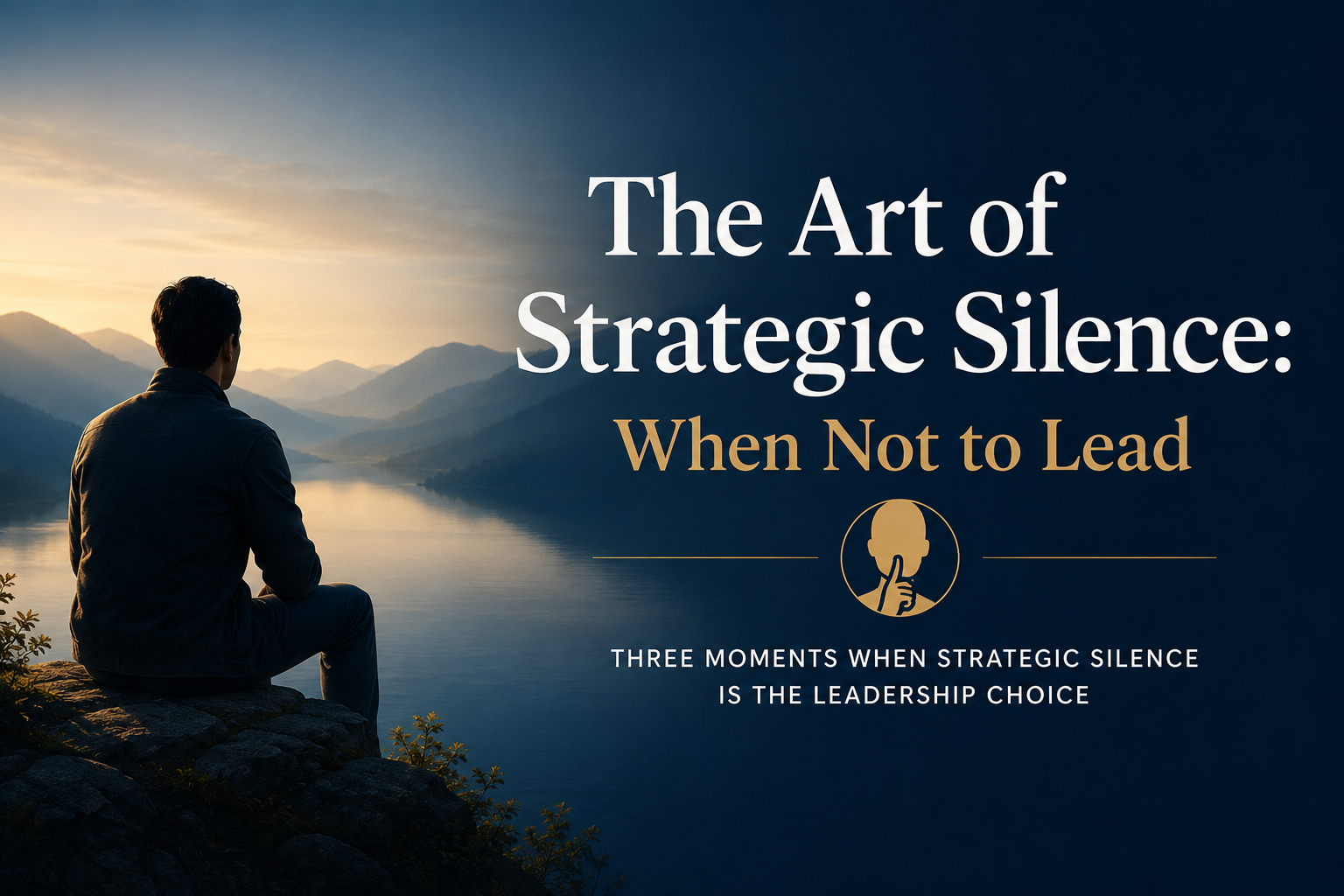

In an era of constant meetings and endless notifications, the ability to think deeply and strategically has become the rarest — and most valuable — leadership skill.
When was the last time you spent two uninterrupted hours on your most important strategic challenge? Not answering emails about it. Not discussing it in meetings. Actually sitting with it — thinking, writing, working through the implications with your full cognitive attention.
For most senior leaders I work with, the honest answer is: I can't remember. And this is not a personal failing. It is a structural consequence of how most leadership roles are now designed — a relentless stream of meetings, messages, and demands that leaves no room for the thinking that the role actually requires.
The Attention Crisis at the Top
Leadership at the senior level requires a quality of thinking that is fundamentally incompatible with constant interruption. Strategy, culture, people decisions, organizational design — these are complex problems. They require the ability to hold multiple variables simultaneously, to see second and third-order effects, to question assumptions, to synthesize across disciplines.
This kind of thinking — what Cal Newport calls 'deep work' — requires extended, uninterrupted concentration. And it is precisely this condition that has become the rarest commodity in most executive schedules.
“The CEO whose calendar is 100% meetings is a CEO who has optimized for being accessible at the cost of being effective.
— Sanjay Koul
Why It Matters More at the Top
The stakes of shallow thinking compound with seniority. A junior analyst making a shallow decision affects a spreadsheet. A CEO making a shallow decision affects hundreds of people, millions in capital, and the trajectory of an organization.
Yet most organizations are structured to make deep thinking hardest for the people who need it most. The higher you rise, the more your time is claimed by others. The more your attention is fragmented. The more your calendar fills up with things that could have been an email.
Three Practices for Executive Deep Work
I've worked with leaders at every level to reclaim the thinking time their roles demand. Three practices consistently make the greatest impact.
The Non-Negotiable Block
Protect 90 minutes of deep work time in the first half of your day, before reactive demands accumulate. Mark it as busy. Do not schedule meetings over it. For three months, treat this block as a board-level obligation — because the work you do in it often is.
The Meeting Audit
Audit every recurring meeting in your calendar. For each, ask: what would happen if this didn't exist? How many of these meetings are genuinely irreplaceable, versus habitual? Most leaders can eliminate 30-40% of their recurring meetings without organizational consequence.
Digital Hygiene
Disable notifications during deep work blocks. Close email. Put your phone in another room. The research is clear: the mere presence of a smartphone on your desk — even face-down — reduces cognitive capacity. Distance is the only effective strategy.
Deep Thinking as Competitive Advantage
There is an argument to be made that in a world of AI, automation, and accelerating information flow, the ability to think deeply — to synthesize, to question, to hold complexity — has never been more valuable or more rare.
Organizations whose leaders protect their thinking time make better decisions, create more coherent strategies, and navigate complexity more effectively. The leaders who do this well are not working less. They are directing their attention to the level of work that only they can do.
In a world of shallow work, depth is a superpower. Protect it accordingly.