
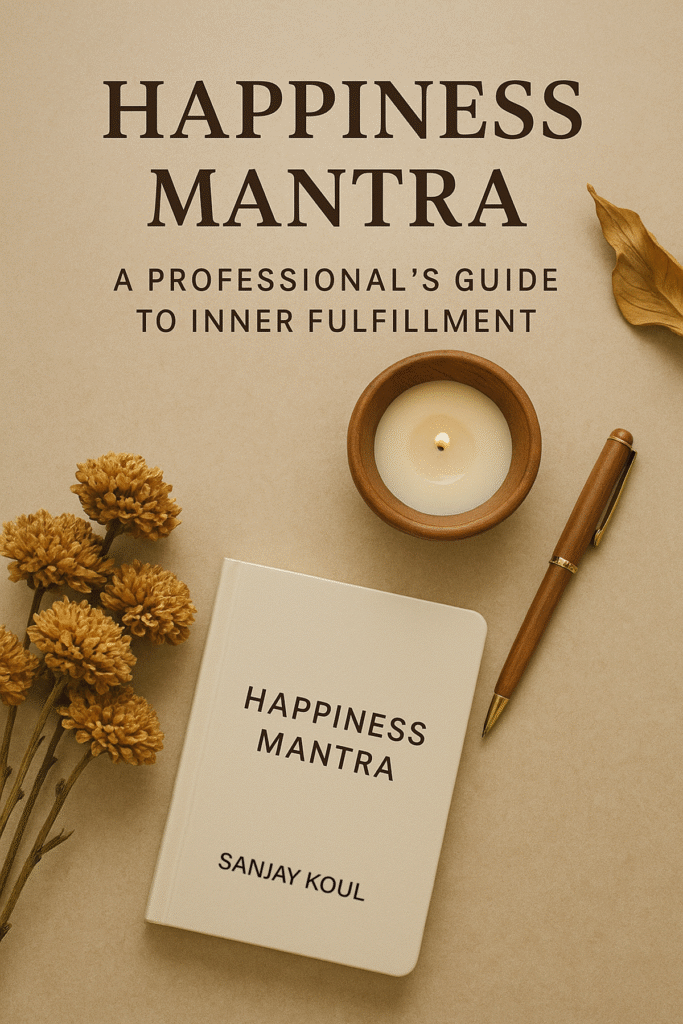
Hapiness Mantra - A Professional Guide to Inner Fulfilment
Happiness Mantra: This book explores the relationship between professional success and personal happiness, emphasising that true fulfilment comes from intentional practices rather than external achievements. It serves as a guide for professionals seeking to cultivate emotional clarity and alignment in their lives.
The Professional Paradox of Happiness Many high-performing professionals achieve external success but struggle with internal fulfilment. This disconnect arises because external accomplishments do not guarantee inner peace, leading to feelings of restlessness and anxiety. High achievers often feel anxious and disengaged despite promotions and accolades. The relentless pursuit of success can disconnect individuals from their core values. The book aims to break the cycle of success-driven unhappiness.
The Importance of Happiness in Today’s Workplace Burnout, anxiety, and disengagement are rising in professional environments, making emotional intelligence and personal well-being essential. Happiness is now recognised as a strategic advantage for both individuals and organisations. Companies see that happy employees are more productive and innovative. Emotional stability enhances leadership credibility. Fulfilment must be built daily, not postponed for retirement.
Defining a “Happiness Mantra” A happiness mantra is a mindset framework that anchors attention and shapes consciousness, emphasising that happiness is created through empowered thought and intentional living. Happiness is not a reward but a practice cultivated through consistent behaviour’s. It involves mindfulness, gratitude, and reflection as key practices. Professionals who treat happiness as a skill are more resilient and fulfilled.
Understanding the Nature of Happiness Happiness is often misconstrued as a byproduct of career milestones, but true happiness is intentional and arises from alignment with personal values. Success without inner alignment feels hollow and unfulfilling. Happiness should be viewed as a practice rather than a reward. Key practices include mindfulness, gratitude, and reflection.
Emotional Integrity and Professional Authenticity Emotional integrity involves acknowledging true feelings and fostering self-awareness, which is crucial for professional authenticity and trust. Professionals must own their moods and set boundaries to protect their energy. Emotional honesty fosters trust within teams and builds authentic professional identities. Happiness defined by internal alignment requires emotional integrity.
Happiness as a Strategic Advantage Incorporating happiness into professional frameworks enhances performance and well-being, benefiting both individuals and organisations. Emotionally fulfilled professionals think clearly, lead empathetically, and navigate change confidently. Organisation’s that promote happiness see improved collaboration and retention. Happiness is a personal benefit and a professional asset.
Integration of Values for True Happiness True happiness lies in integrating personal values into all areas of life, rather than seeking a balance between work and personal life. Professionals should align their leadership style with their personality and values. Happiness becomes foundational to success when integrated into daily life. Reflecting on values can help professionals create a more fulfilling life.
Understanding and Managing Sadness in Professional Life Sadness is often minimised in professional settings, yet it serves as a critical emotional signal indicating misalignment and unmet needs. Sadness can arise from job loss, project failures, or workplace conflict. Ignoring sadness can lead to burnout and disengagement. Recognising sadness empowers professionals to address root causes.
Practical Exercises for Emotional Awareness The book provides practical exercises to help professionals understand and manage sadness, fostering emotional alignment and resilience. Emotional check-in journals help identify sadness triggers. Naming and validating sadness reduces its negative impact. Values alignment reflection connects sadness to unmet professional values.
Bridging Momentary Joy and Lasting Fulfilment Happiness operates on two levels: experienced happiness (momentary joy) and evaluated happiness (long-term fulfillments). Integrating both dimensions is essential for a balanced life. Experienced happiness includes immediate positive emotions from enjoyable activities. Evaluated happiness reflects life satisfaction and alignment with core values. Both dimensions are interconnected and essential for overall well-being.
Practical Strategies for Cultivating True Happiness The book outlines practical strategies to enhance both experienced and evaluated happiness, promoting a fulfilling life. Schedule time for joyful activities to boost experienced happiness. Design career paths that reflect long-term goals and personal missions. Practice mindful reflection to foster integration of joy and purpose.
The Empowered Happiness Mindset Explained The Empowered Happiness Mindset emphasises that happiness is a cognitive framework that individuals can cultivate internally, rather than being solely influenced by external circumstances. This approach encourages personal agency in emotional mastery and the development of resilience. Happiness is not a byproduct of external factors but a deliberate mental architecture. It focuses on reclaiming personal agency in how we perceive and respond to life events. The mindset promotes emotional regulation, self-compassion, and clarity in navigating challenges.
Key Traits of the Empowered Happiness Mindset The empowered happiness mindset is characterised by specific traits that foster emotional resilience and well-being. These traits include responsiveness, mental discipline, and resilient optimism.
Responsiveness Over Reactivity: Encourages thoughtful responses rather than impulsive reactions, transforming emotional turbulence into growth opportunities.
Mental Discipline: Involves intentional management of thoughts and emotions through practices like cognitive reframing and focused attention.
Resilient Optimism: A grounded belief in growth and joy, even amid adversity, recognising setbacks as temporary and specific.
Practical Steps to Cultivate Happiness To cultivate the empowered happiness mindset, individuals can engage in practical exercises that enhance self-awareness and emotional regulation. These steps include increasing self-awareness, practicing mindful responsiveness, and fostering resilient optimism.
Increase Self-Awareness: Regularly check in with emotions and identify triggers. Practice Mindful Responsiveness: Use deep breathing and reflection before reacting to stressors. Foster Resilient Optimism: Maintain a gratitude journal and reflect on personal growth from challenges.
Traditional vs. Modern Views on Happiness The perception of happiness has shifted from a traditional focus on comfort and control to a modern understanding that embraces discomfort and growth as essential for fulfilment. This new paradigm encourages individuals to view challenges as opportunities for personal development. Old Paradigm: Happiness seen as the absence of difficulty, with a focus on avoiding failure and seeking comfort. New Paradigm: Emphasises the importance of discomfort for growth, recognising that emotional range enriches happiness.
Importance of Shift: Encourages risk-taking and innovation, leading to deeper relationships and authentic happiness.
Reflection on Discomfort as Growth Embracing discomfort is crucial for personal and professional growth. Reflective practices can help individuals turn challenging experiences into valuable learning opportunities. •
Identify Difficult Experiences: Reflect on past challenges and their contributions to growth.
• Reframe Discomfort: View discomfort as a signal for learning rather than a threat.
• Build Resilience: Develop habits that support recovery and emotional agility.
Happiness as an Inside Job : Happiness is an active practice rooted in personal agency and emotional mastery. By cultivating key traits and engaging in practical strategies, individuals can create a sustainable framework for happiness.
Happiness is not defined by external circumstances but by internal choices and responses. Empowerment involves recognising and nurturing one’s emotional needs and values. The journey to happiness is ongoing, requiring consistent effort and reflection.
You can purchase this complete book : https://netrtva.com/shop/happiness-mantra-a-professional-guide-to-inner-fulfilment/